
One Shot Soccer: Swipe & Score
World Sports ArenaSports
4.641.00 Reviews
- Version
- 2.0
- Installs
- 1.00M
- Age Rating
- Everyone
Screenshots
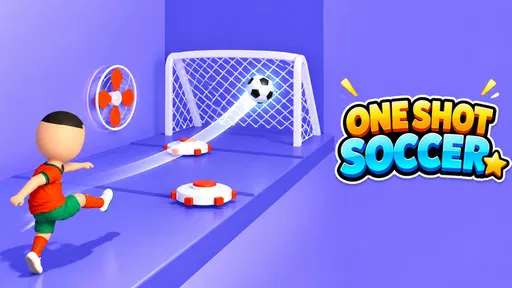
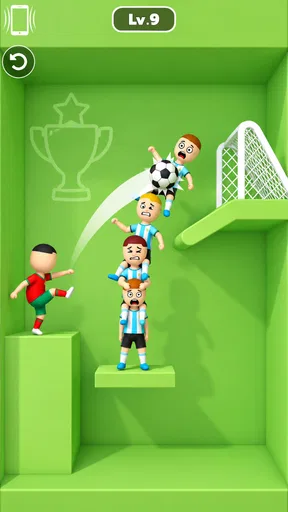
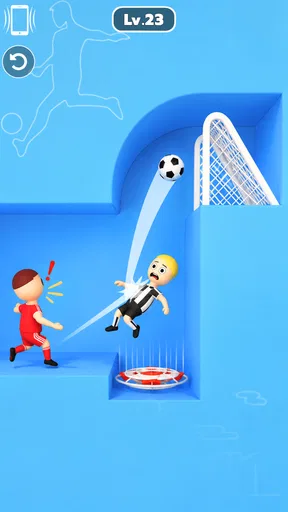
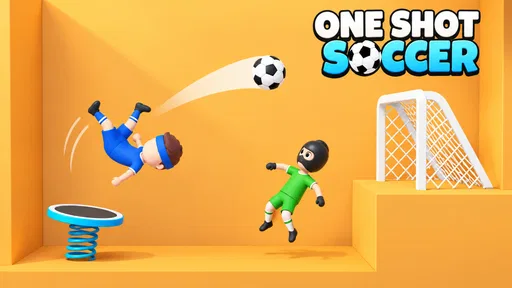
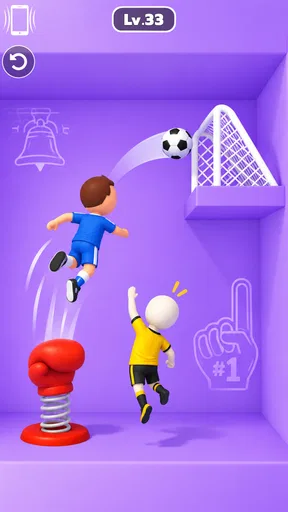
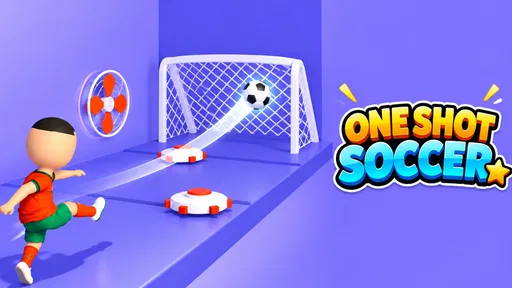
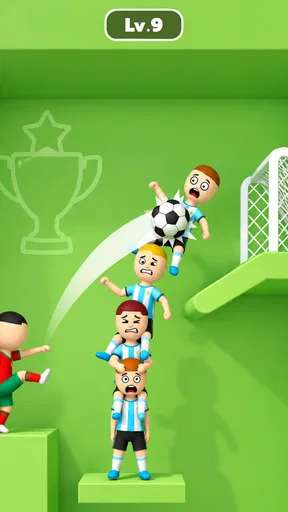
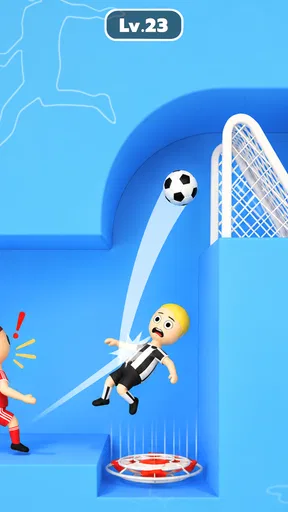
Our Review of One Shot Soccer: Swipe & Score
 Analysis by Appyee
One Shot Soccer: Swipe & Score is the kind of sports game I reach for when I want a quick challenge rather than a full football simulation. Its central question is simple: can I place every shot well enough to beat the situation in front of me? That simplicity is also its identity. Instead of asking me to manage a complete team, learn a large control scheme, or commit to a long match, it focuses attention on the shot itself.
After spending time with it, I see the appeal clearly. This is a compact football experience built around immediate decisions, timing, and the satisfaction of getting a difficult attempt right. It is listed as a free game, so there is no purchase decision required before trying it. That makes the first step easy, especially for someone who wants a casual sports game for short sessions.
The game comes from World Sports Arena and sits in the Sports category. It has an average rating of 4.7 from around 1.7 thousand ratings, while its listing shows over 500 thousand installs. Those figures suggest that the focused idea has found an audience, but they do not change the main question I would ask before installing it: do you enjoy repeating a narrow skill until your control improves?
How the one-shot format feels in everyday play
The strongest part of the experience is how quickly it communicates its purpose. I do not need to understand a complicated football system before making progress. The action centers on a single attempt, which makes each turn feel readable: I look at the situation, choose how to direct the shot, and live with the result.
That structure works particularly well on a phone. Touch controls are most comfortable when they support a clear gesture, and a shot-focused game avoids the crowded virtual buttons that often make mobile football games feel awkward. The appeal is not realism in the broadest sense. It is the concentration that comes from having one important action instead of a whole team to coordinate.
A realistic use case is a short break during a commute or between tasks. I can open the game, take a few attempts, and stop without feeling that I have abandoned a match halfway through. It also suits the moment when I want something interactive but do not have the attention for a strategy game or a long sports career mode.
The one-shot design creates a useful tension. A successful attempt feels earned because the game gives the action nowhere to hide. In a conventional football title, a missed chance can be blamed on positioning, passing, defensive pressure, or a poor build-up. Here, the result feels much more directly connected to my decision. That clarity is satisfying, but it also means mistakes can feel repetitive if I am not enjoying the act of refining my technique.
Why the focused controls matter
For me, the main skill is not memorizing a large set of commands. It is developing a consistent swipe or touch motion and learning when to make a small adjustment instead of overcorrecting. That gives the game a gentle learning curve at first, while leaving room for personal improvement. I found it more useful to repeat a controlled motion than to make dramatic gestures and hope for a better result.
A practical tip is to treat early attempts as calibration rather than as tests of football knowledge. Notice how your usual gesture behaves, then change one part of it at a time. If you alter direction, speed, and timing together, it becomes difficult to understand why the next shot worked or failed. This small habit turns short play sessions into deliberate practice.
Another useful approach is to avoid playing every attempt at maximum speed. The format encourages quick reactions, but pausing mentally for a moment before the gesture can improve consistency. That is one of the hidden strengths of a simple sports game: because there are fewer actions, I can pay closer attention to the relationship between intention and outcome.
What it offers instead of a full football simulator
One Shot Soccer is not trying to replace a traditional football game with teams, extended matches, complex tactics, and broader control. Its value comes from removing those layers. If I want to shape an entire match or make decisions across the pitch, a full football simulation is the better choice. If I want a concentrated shooting challenge that starts quickly, this approach is more convenient.
That comparison is important because the category includes very different types of games. A management title rewards planning over time. An arcade football game may emphasize movement and spectacle. A realistic simulator asks me to learn several systems at once. This game narrows the experience to the moment of finishing, which makes it accessible but also less varied than those alternatives.
I would describe it as a good companion game rather than a complete football hobby. It can fill small gaps in the day and provide a repeatable challenge, but it is unlikely to satisfy someone who installs sports games mainly for league progression, squad building, or tactical control.
Value, limitations, and the right kind of player
I weigh the game’s free entry against its deliberately narrow focus, then consider who is likely to enjoy practicing one touch skill and who would be better served by a fuller football experience. The key question is not whether it can do everything, but whether its compact challenge earns a place in your spare moments.
What free access means here
The listed price is free, so I can evaluate the game without treating it as a purchase that needs to justify a fixed cost. That is a meaningful advantage for a casual player. I do not have to decide whether a one-shot format is worth paying for before discovering whether the controls suit me.
Free access does not automatically make every limitation irrelevant. My time still has value, and a game built around one repeated action has to keep that action engaging. The question is therefore less about saving money and more about whether the focused loop remains enjoyable after the novelty fades. For a player who likes practice and short challenges, the free entry makes experimentation easy. For someone seeking a deep football package, free access will not compensate for the narrower scope.
I also think the absence of a required purchase changes how I would recommend it to friends. I would suggest trying it during a spare moment rather than presenting it as a major replacement for another sports game. That sets the right expectation: the reward is quick interaction and improving a specific skill, not a large collection of football systems.
Where the experience can become repetitive
The central trade-off is variety. A focused mechanic can feel clean and satisfying, but it can also become predictable if a player needs constant changes of pace. Since the game is built around scoring shots, anyone who prefers passing sequences, defensive battles, or long-form match drama may feel that the experience leaves too much out.
This is not a flaw in the basic idea, but it is a real boundary. I would not install it expecting the breadth of a console-style football game. The best way to judge it is to ask whether repeating a precise action sounds appealing. If the answer is yes, the narrow design becomes a strength. If the answer is no, the same design will probably feel limiting quite quickly.
Another trade-off is the difference between accessibility and depth. A small control set is welcoming because I can begin without studying a manual. At the same time, players who enjoy mastering elaborate systems may find fewer long-term layers to explore. The game’s challenge comes from execution and consistency, not from building a complex strategy around many interacting mechanics.
Small-session tactics that improve the experience
I found that short, focused sessions make more sense than trying to play indefinitely. After several attempts, frustration can make my gestures less controlled, especially when I start chasing a missed shot. Stopping after a good run or taking a brief pause helps preserve the feeling that I am practicing rather than simply repeating failure.
It is also worth separating two goals: scoring immediately and learning the control. If I only care about the next result, I may keep changing my approach. If I focus on consistency first, I can identify which motion feels reliable. That distinction is useful for touch-based sports games because confidence often comes from repeatability, not from one lucky success.
For families, the age label is Everyone, which makes the game broadly approachable as a casual sports option. I would still recommend that each player try the controls personally, because age suitability and personal enjoyment are different questions. A young player may like the instant feedback, while an older football fan may want more tactical depth than this format is designed to provide.
Who is most likely to enjoy it
I think the best audience is a player who likes arcade-style sports challenges, quick retries, and the feeling of improving through repetition. It is especially suitable for people who want a football-themed game that does not demand a long uninterrupted session. The free price also makes it a low-risk addition to a phone for occasional play.
It can work well for someone who normally avoids sports games because traditional controls seem complicated. The one-shot focus gives that player a clear starting point. Rather than learning movement, passing, tackling, and formations at once, they can concentrate on the act of finishing an attempt.
On the other hand, I would tell a dedicated football simulation fan to be cautious. If your favorite part of the sport is controlling the whole match, choosing a formation, or developing a squad, this game is likely to feel intentionally small. A management game or full football simulator would deliver more of what you want, even if it takes longer to learn.
I would also skip it if I dislike repetition as a design principle. The game’s appeal depends on returning to the same basic challenge with a better understanding of control. That is a genuine strength for some players and a clear warning for others. No amount of free access changes that fundamental fit.
Version and device considerations
The current version is 1.5, and the listed minimum operating system is Android 7.1. That gives the game a relatively broad compatibility range for Android users with older devices. I would still check the device’s available storage and general performance before installing any game, but the stated system requirement should make it approachable for people who are not using a recent phone.
Because this is a touch-centered sports game, screen responsiveness matters more to me than raw specifications alone. A phone with an inconsistent touchscreen can make a precise swipe feel like a gameplay problem when the real issue is input quality. If your device already registers gestures reliably in other apps, you are more likely to get a fair impression of the controls.
The release date shown for the game is August 20, 2026. I would keep that context in mind when interpreting the version number: the experience may continue to develop, but I would judge the current release by what it offers now rather than by assumptions about future additions. The sensible approach is to install it for the present one-shot challenge, not for features that may or may not arrive later.
My recommendation after weighing the trade-offs
The best value here is free, focused practice rather than a complete football package. That distinction sums up my view. I enjoy the directness of taking one attempt and immediately seeing whether my control worked. The game is easy to understand, convenient in short sessions, and suitable for players who want a lighter sports experience.
Its limitations are equally clear. The narrow format may not provide enough variety for long play sessions, and it does not serve the same purpose as a full football simulation or a management game. I would not recommend it as the only sports game on a phone for someone who wants broad football control. I would recommend it as a compact alternative when the goal is to make a shot, learn from the result, and try again.
World Sports Arena has chosen a specific idea instead of trying to cover every part of football. In my experience, that makes One Shot Soccer: Swipe & Score most appealing when I approach it on its own terms. It is not about managing an entire match; it is about making the next attempt count.
If you want a free sports game that can fit into a short break and you enjoy improving a simple touch skill, I think it is worth trying. If you need leagues, tactics, team control, or a constantly changing football experience, I would skip it and choose a broader alternative. For the right player, One Shot Soccer: Swipe & Score delivers a clear, low-commitment challenge without asking for a purchase first.
Privacy and Permissions
See what permissions an app requests and how it handles your data.
- Phone
- read phone status and identity
- Wi-Fi connection information
- view Wi-Fi connections
- Device ID & call information
- read phone status and identity
- Other
- view network connections, full network access, control vibration, prevent device from sleeping, Google Play license check
Verdict
Strengths of One Shot Soccer: Swipe & Score
- Simple swipe controls make matches easy to learn.
- Quick games suit short breaks and on-the-go play.
- Accurate swipes and timing make scoring feel satisfying.
- Minimal controls keep the focus on shooting and defending.
- Arcade-style gameplay encourages repeated attempts and improvement.
Limitations of One Shot Soccer: Swipe & Score
- Gameplay may feel repetitive after extended sessions.
- Precision can be frustrating when swipes are not recognized as expected.
- Limited depth may disappoint players seeking full soccer management.
- Progression can lose appeal once familiar challenges are mastered.
- Small screens may make detailed shot placement difficult for some users.
Other Releases by World Sports Arena
View All
Cannon Chaos: Silly Shots
Simulation4.4
Similar Picks in This Category
View All
8 Ball Pool
Miniclip.com4.8

Pooking - Billiards City
AIM TOP GAME TECHNOLOGY LIMITED - pool4.6

Carrom Pool: Disc Game
Miniclip.com4.4

EA SPORTS FC Soccer Mobile 26
ELECTRONIC ARTS4.6

World Soccer League
mobirix4.3

Soccer Cup 2026: Football Game
INLOGIC SPORTS - football tennis golf soccer4.3
Frequently Asked Questions
What is One Shot Soccer: Swipe & Score?
One Shot Soccer: Swipe & Score is a casual football game focused on taking quick, decisive shots rather than managing an entire team or playing full matches. After reviewing its core gameplay, the main appeal is the simple swipe control: you guide the ball toward the goal while trying to beat the goalkeeper, score accurately, and complete increasingly challenging attempts. It is designed for short, straightforward gaming sessions.
How do you play One Shot Soccer: Swipe & Score?
The game is built around swipe-based controls. You generally swipe across the screen to determine the direction and power of your shot, then release to send the ball toward the target. Success depends on timing, accuracy, and recognizing the goalkeeper’s position or movement. The controls are easy to understand, but later attempts can require more careful aiming and better control of each swipe.
Is One Shot Soccer: Swipe & Score free to download and play?
One Shot Soccer: Swipe & Score can typically be downloaded without an upfront purchase, allowing users to try the main gameplay before committing financially. However, availability of advertisements, optional purchases, extra content, or other monetization features may depend on the version and platform. Before downloading, check the official Google Play or App Store listing for current pricing, in-app purchase details, and any regional differences.
Does One Shot Soccer: Swipe & Score require an internet connection?
The basic shooting gameplay may be suitable for quick offline sessions, which makes the app convenient when you are traveling or have limited connectivity. Nevertheless, some features can depend on an internet connection, including advertisements, online rankings, cloud-related services, updates, or promotional content. For the most accurate information, review the current store description and test the game after installation with mobile data and Wi-Fi disabled.
Is One Shot Soccer: Swipe & Score suitable for children and casual players?
The game is generally approachable for casual players because its main mechanic is based on simple swipes rather than complicated football controls, team management, or lengthy tutorials. It can also be entertaining for children who enjoy quick sports challenges. Parents should still check the listed age rating, advertising behavior, privacy information, and any in-app purchases, since these details can vary between Android and iOS versions.
Play our best games!


